Rust streamer servers explained why the Rust Isles invite format beats a normal wipe
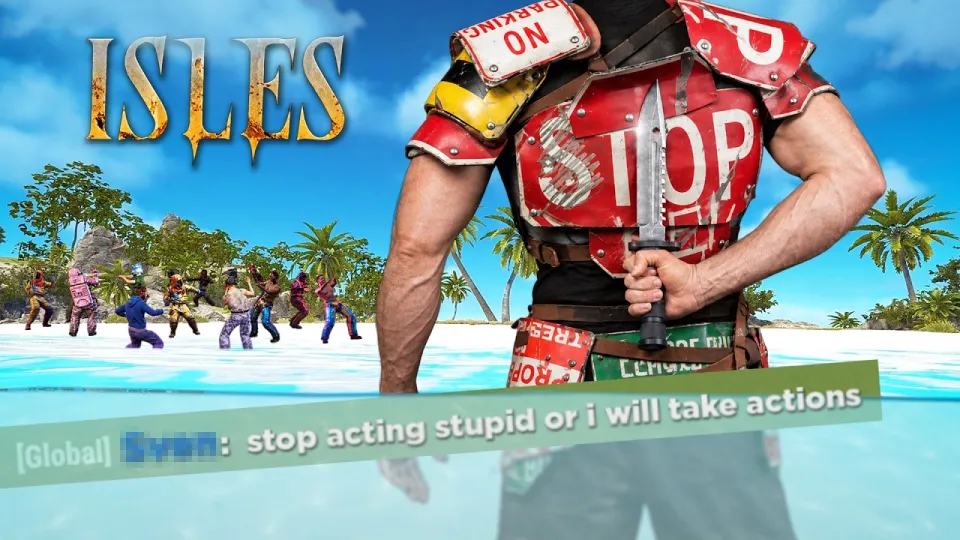
Video: Not Another Rust Streamer Server
Need articles like this for your video? They help promote it on YouTube and Google — order them in the Telegram bot @sat_sit_bot. The bot writes and publishes the articles itself (with your YouTube video embedded) on popular topical websites (no ads). Your first 50 articles are free.
· based on the channel Stimpee
Key takeaways
- Rust Isles is an invite-only streamer server with a pirate theme, roleplay rules and active admins.
- Stimpee joined after years away from streamer servers and documented the session on his channel.
- Admins reportedly stripped weapons from his inventory, treating him as a known troll risk.
- Server politics — clan loyalty, stolen boats, chat meltdowns — drove most of the drama.
- For solo players, a normal wipe still offers more freedom than a moderated roleplay server.
Rust streamer servers are invite-only private servers where content creators play together under extra rules, and the Rust Isles session shown by Stimpee is the clearest argument for why that format is worth watching but not worth playing for most people. A normal public wipe gives you full freedom and no audience; a streamer server gives you structure, drama and constant admin attention. If you want to understand the trade-off before chasing an invite, the Stimpee broadcast is the reference point, and his live channel at Stimpee on Twitch is where the next session would appear first.
What a Rust streamer server actually is
A Rust streamer server is a private, whitelisted Rust world reserved for content creators, usually built around a theme, a shared storyline and a set of social rules that public servers never enforce. Rust Isles, the server featured in the Stimpee video, leans on a pirate setting: boats, islands, crews and a roleplay layer on top of the standard survival loop.
Mechanically the game is still Rust. You farm wood and stone, build a base, craft weapons, raid, and lose everything when someone gets lucky. What changes is the meta around it:
- Access is by invitation, so the population is small and every name is recognisable.
- Admins watch closely and intervene, including by editing inventories.
- Roleplay expectations exist alongside normal PvP, which creates friction when one player ignores the script.
- Sessions are short and event-driven rather than a months-long wipe grind.
- Everything is streamed, so reputation matters more than loot.
That last point is the whole design. On a public server a betrayal costs you a base; on a streamer server it costs you a clip that follows you for months.
Why Stimpee's Rust Isles run became the talking point
Stimpee returned to a streamer server after years away and immediately played the role the server was least prepared for: the player who treats rules as suggestions. According to viewer reaction and the video's own framing, admins were on him at gatherings and eventually went into his inventory to remove weapons, treating him as a walking weapons-of-mass-destruction risk.
The boat episode is the clearest example of the format's weakness. A clan leader recruited him with no real vetting, then reacted badly in chat when Stimpee took the boat and left the crew stranded. From a pure Rust perspective that is an ordinary Tuesday. From a roleplay perspective it was a gift — a betrayal arc handed to the server for free — and it was shut down with a public complaint instead of being played out.
That mismatch is what viewers keep circling back to. The server wants pirate-flavoured stories about theft and shifting loyalty, but the people running crews often want obedient members. When the two collide, the troll wins the clip and the clan loses the narrative.
The streamer-server social experiment problem
Streamer servers turn Rust into something closer to a social lobby than a survival game, and that shift is divisive. Supporters get a compact, watchable storyline with familiar faces and no dead air. Critics see adults performing childish politics in chat while the actual game becomes background noise.
Both readings are fair. The format produces moments a normal wipe cannot: a clan leader melting down over a stolen boat, admins pre-emptively confiscating gear, a known troublemaker being watched at every gathering. It also produces the opposite: manufactured drama, rules that exist only to protect feelings, and a server culture where being normal is treated as a personality quirk.
For a solo player the calculation is simple. A streamer server removes the anonymity that makes Rust dangerous and replaces it with moderation that makes it safe. Safe Rust is not the same game.
How the Rust Isles rules compare to a public wipe
Rust Isles is a moderated environment, and the difference shows up in concrete ways rather than vague vibes. On a standard official or community server you can expect full loot loss, unrestricted raiding, offline raids, roof camping and clan warfare with no referee. On a streamer server each of those is filtered through admin judgement and audience expectations.
- Raiding: allowed in principle, but a raid on a fellow creator is content first and a loss second, so it gets negotiated.
- Betrayal: historically the heart of Rust, here it can trigger complaints in chat and admin review.
- Offline raiding: widely considered poor form, which removes one of the game's core anxieties.
- Clans: exist, but loyalty is performative and recruitment is casual, which is exactly how the boat incident happened.
- Gear: can be removed from your inventory by staff, a power no public server has over you.
The trade is fairness for freedom. If you enjoy the paranoia of not knowing who is watching your base, the public wipe is the better product.
What viewers actually take away from these sessions
The most useful thing about the Stimpee video is that it demonstrates the format's limits without pretending otherwise. A streamer server is a party you are invited to, not a place you earn your way into, and the guest list shapes everything: who gets raided, who gets forgiven and who gets their weapons quietly deleted.
For aspiring creators the practical lesson is about reputation. Being known as the player admins watch is a badge in the Rust community and a liability on a moderated server. Stimpee's session sits exactly on that line, which is why clips from it travel further than the gameplay itself.
For regular players the lesson is simpler. Watch streamer servers for the stories, play public wipes for the game. The survival loop, the farming, the base building and the raid tension are all better when nobody is refereeing.
Useful links
- Stimpee on Twitch — live streams and future server sessions
- Stimpee on Twitter — announcements and clips
- Stimpee on Instagram — behind-the-scenes posts
- Stimpee Discord — community chat and server news
Final verdict on Rust streamer servers
Streamer servers like Rust Isles are worth watching and rarely worth envying, because the moderation that keeps them watchable is the same thing that removes what makes Rust tense. The Stimpee session proves the point: the best moments came from someone ignoring the script, and the weakest came from the people enforcing it. If you want drama with familiar faces, follow the format; if you want real survival, load a normal wipe. Either way, the next chapter lands on Stimpee's Twitch channel, and the channel's own coverage of the Rust Isles run is the place to start.
Questions & answers
What is a Rust streamer server?
It is a private, invite-only Rust server reserved for content creators, often built around a theme and a loose roleplay storyline. Access is whitelisted, the population is small, and admins actively moderate behaviour and even inventories. Rust Isles, the pirate-themed server in the Stimpee video, is one example.
Why do admins watch certain players so closely?
Because a single known troublemaker can derail a curated session for everyone else. In the Stimpee video staff reportedly went into his inventory to remove weapons before he could use them. That level of intervention is normal on streamer servers and impossible on public ones.
Is a streamer server better than a normal Rust wipe for solo players?
Usually not. A public wipe gives you anonymity, unrestricted raiding and no referee, which is where Rust's tension comes from. Streamer servers trade that freedom for structure and an audience, so they suit viewers and creators more than solo survival players.
What happened with the boat and the clan leader?
Stimpee was recruited into a crew with little vetting, then took the boat and left the group stranded on an island. The clan leader complained publicly in chat rather than turning it into a story, which viewers saw as a wasted roleplay opportunity and a sign of how thin server rules can be.